
Sports LED Screen

Why Do Sports Venues Need LED Screens?
Nowadays, sports events are very popular for us. Modern sports venues rely on high-brightness screens to transform the live game experience and deliver massive value to sponsors.
Enhanced Fan Experience
● Instant Replays: High-definition screens let fans review close plays and controversial referee calls immediately.
● Stat Tracking: Displays show real-time player statistics, live scores, and game clocks from every angle.
● Close-Up Views: Fans in upper tiers or nosebleed seats can clearly see player expressions and action details.
● Pre-Game Entertainment: Big screens pump up the crowd with hype videos, player introductions, and interactive fan-cam segments.
Increased Revenue Streams
● Dynamic Advertising: Digital boards let stadiums rotate multiple sponsors throughout an event rather than relying on one static sign.
● Targeted Ads: Venue operators can change advertisements based on the specific event, targeting different demographics for concerts versus football games.
● Concession Promotion: Digital menus can update prices instantly, showcase combo meals, or offer flash discounts during halftime.
Operational Efficiency & Safety
● Crowd Control: Large screens display clear exit routes, seating sections, and transit updates to manage foot traffic.
● Emergency Alerts: Security teams can broadcast instant safety warnings, severe weather alerts, or evacuation protocols to the entire crowd.
● Event Versatility: Stadiums can instantly change the branding, layout, and language of digital signage when switching from a sporting event to a concert.
Technical Superpowers
● Sunlight Visibility: High-end outdoor LED panels deliver incredible brightness, staying perfectly visible even under direct, harsh sunlight.
● All-Weather Durability: Modern stadium displays feature high waterproof and dustproof ratings to operate reliably through heavy rain, snow, and extreme heat.
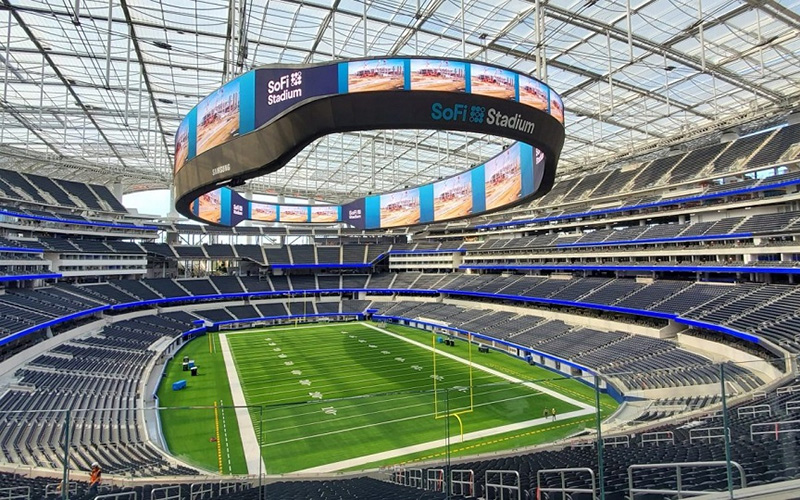
● Seamless Scalability: LED technology allows venues to build massive, custom-shaped scoreboards (like center-hung cubes or 360-degree ribbons) without visible gaps or seams.
How to choose a Sports Led Screen?
Choosing the right LED screen for a sports venue requires balancing the venue environment, audience distance, safety requirements, and broadcasting requirements. Standard commercial LED screens cannot meet the needs of dynamic sports venue environments. Below is some advice for your reference:
Viewing Distance: The rule of thumb is 1 millimeter of pixel pitch per 1 meter of viewing distance.
Perimeter Boards: Usually employ a P8 or P10 pitch, as they sit relatively close to the stands and cameras.
Massive Scoreboards: Large video walls viewed from across a massive stadium can utilize larger pitches like P16 or P20.
Indoor Arenas: Suspended center hung cubes use much tighter pitches like P2.5, P3, or P4 for close-up clarity
Key Features
Sports LED displays stand out because of the following key features:
● High brightness and contrast: Ensures clear images and readable content under direct sunlight and bright stadium lighting.
● Wide viewing angles: Allows spectators to see scores, videos, and graphics clearly from different seating areas.
● Modular and scalable design: Enables flexible screen sizes and shapes based on stadium layouts, viewing distances, and installation requirements.
● Reliable performance and low maintenance: Designed for long operating hours with durable components and efficient power management.
Sports LED screens can be customized for different applications, including stadium video walls, LED perimeter displays, digital scoreboards, ribbon displays, and outdoor advertising screens. The right configuration depends on factors such as venue size, viewing distance, content requirements, and indoor or outdoor installation conditions.
Sports LED screens are categorized by their specific placement and function in a venue, including Jumbotrons, Perimeter LED Displays, and Center-Hung LED Displays.
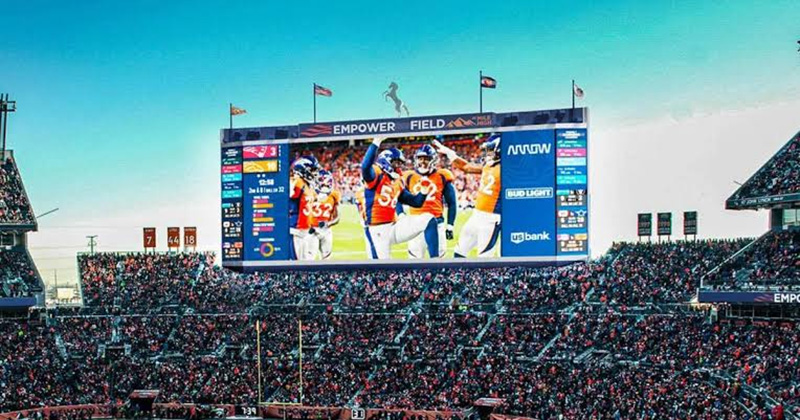
Large LED Video Walls (Jumbotrons)
Jumbotrons, or large LED video walls, usually sit at each end of the stadium. These massive screens broadcast high-resolution video, showing game highlights, fan shoutouts, and promotional content.
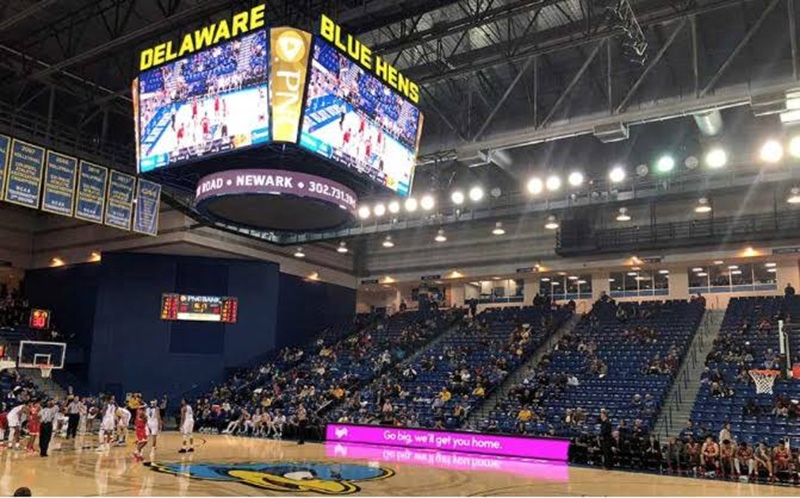
Perimeter LED Displays
Perimeter LED screens run along the edges of fields and courts—especially in soccer and basketball arenas. These long, horizontal screens display animated ads and sponsor messages throughout the game.
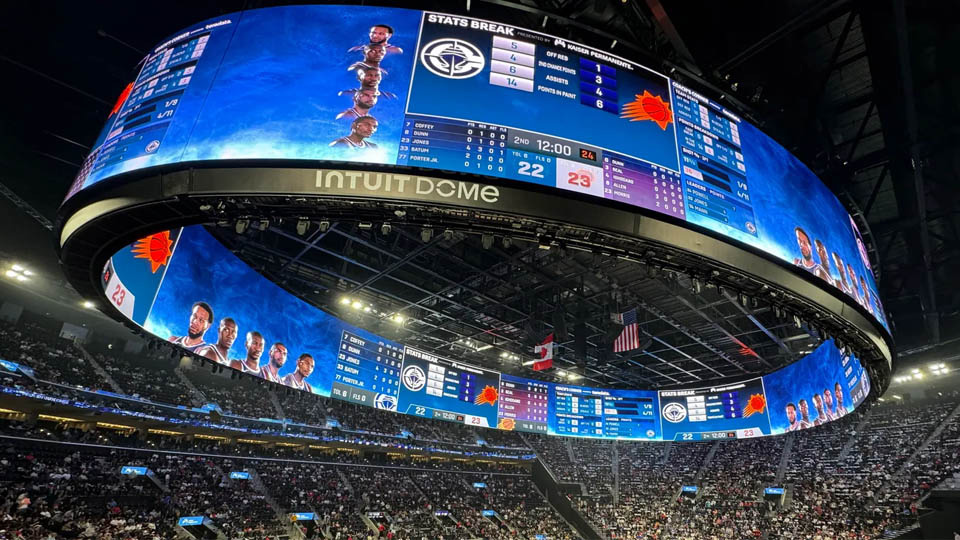
Center-Hung LED Displays
Indoor arenas often use center-hung displays, suspended above the middle of the playing area. These cube-shaped or cylindrical screens face every direction, giving all fans a clear view of scores, replays, and video graphics.
Especially for fans in distant seats, these screens help capture important details of the action. With their modern features, such as high brightness and fast refresh rates, they perform well in both daytime and nighttime events.
How Much Does a Stadium LED Screen Cost?
A stadium LED screen typically costs between $3,000 and $800,000 or more, driven primarily by screen size, pixel pitch resolution, and installation scale. Costs average $350 to $1,000 per square meter for the panels alone, while total project expenditures vary widely by application.
Cost Breakdown by Screen Type
● Perimeter/Ribbon Displays: Ranges from $1,000 to $3,000 per linear foot, with total project costs scaling from $500,000 to $2,000,000+ for large field-encircling configurations.
● Center-Hung Scoreboards & Video Walls: Small community setups cost $50,000 to $150,000, whereas professional arena setups range from $150,000 to $500,000+ depending on integrated statistics software.
● Per Square Meter Panel Pricing: Standard outdoor stadium modules (P6 to P10) cost $350 to $900 per m², while higher-density, fine-pitch variants cost significantly more.
Key Cost Factors
● Pixel Pitch: Lower pixel pitch (such as P2.5 vs P10) means higher pixel density, increasing raw manufacturing costs by upwards of 50% to 600% for comparable dimensions.
● Structural Engineering & Installation: Rigging, heavy-duty weatherproofing, specialized soft rubber louvers (for player safety on perimeter units), and structural reinforcement add substantially to the base hardware price.
● Control Systems: Professional broadcast software, redundant processors, and dedicated scoring integrations add $1,000 to $10,000+ to the package.
If you can share the estimated screen dimensions or the type of display you need (scoreboard, perimeter wrap, or center-hung), I can help calculate a tighter budget estimate.
Where Can Sports LED Screens Be Used?
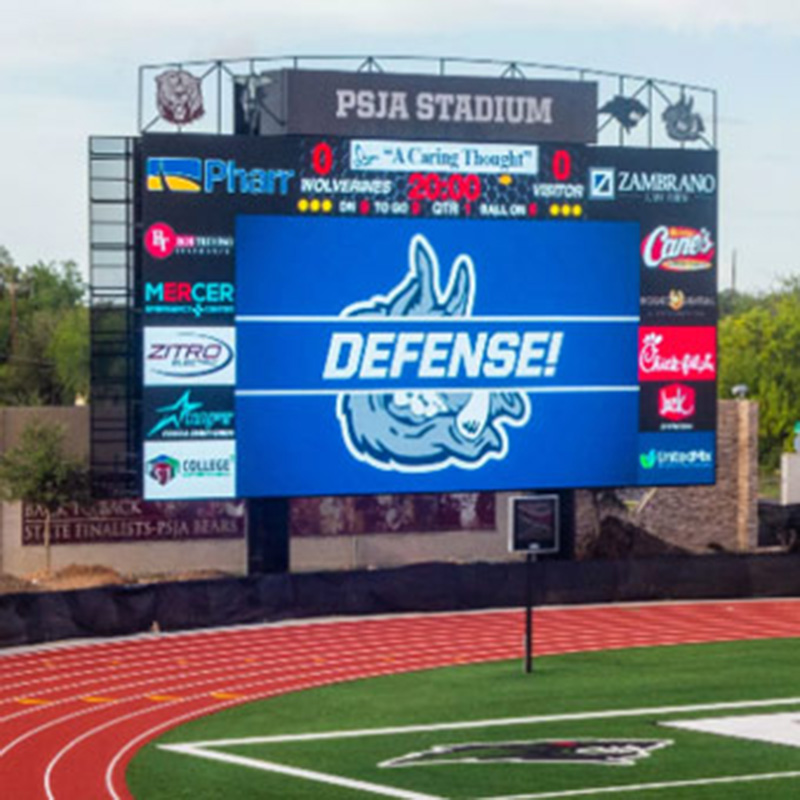
Outdoor Stadiums and Arenas
In outdoor stadiums, football fields, or skating rinks, LED screens are installed along the perimeter of the field to display advertisements, scores, and event slogans.
Their high brightness and waterproof design ensure clear images even in sunlight. They also give a steady place for brand ads that many people can see.
Indoor Large Stadium LED Screens
Basketball, volleyball, and multi-purpose sports centers usually have LED main screens or screens that hang down. These screens show the scores, stats about the players, and replays in slow motion. The image on the screen looks sharp, and the screen updates fast. This helps the audience see every great moment as it happens. It also makes the competition feel more professional.
These screens are good to use in interviews. People can use them in fun places too. They work well before matches to show promotions. Sponsors get more ways to show their brands with these screens.
LED Screens for Outdoor Live Broadcasts
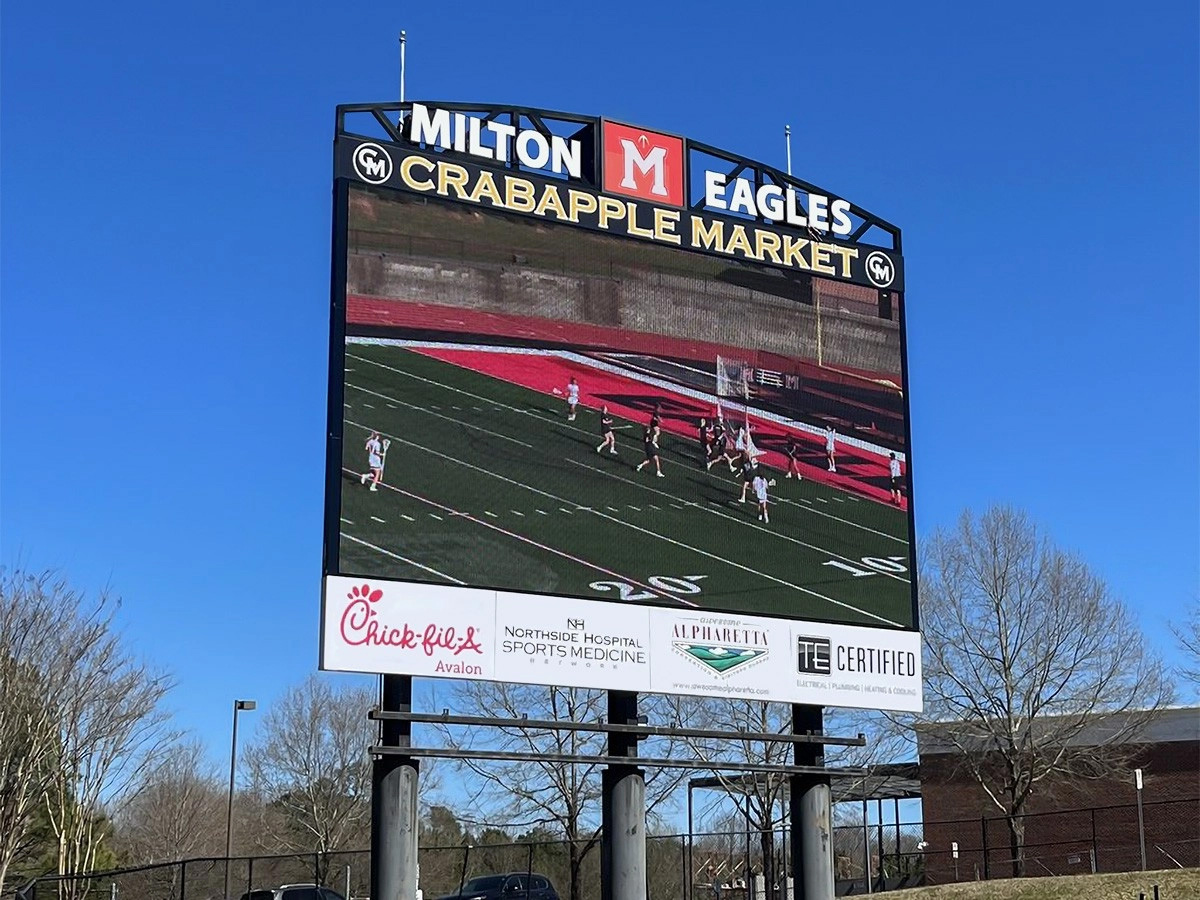
At outdoor events like marathons, car races, and skiing, the big area can make it hard for people to see everything. To help with this, the site has giant LED screens. These screens show event video, scores, and what is being said at the event. This helps people who are far from the main spot feel as if they are part of it. It makes people interact and feel more involved.
Vehicle-mounted or trailer-mounted LED display systems are used at outdoor events. You can move them fast, and it is easy to set them up. They work in all types of weather, so live broadcasts go smoothly without stops.
LED Screen for Swimming Applications
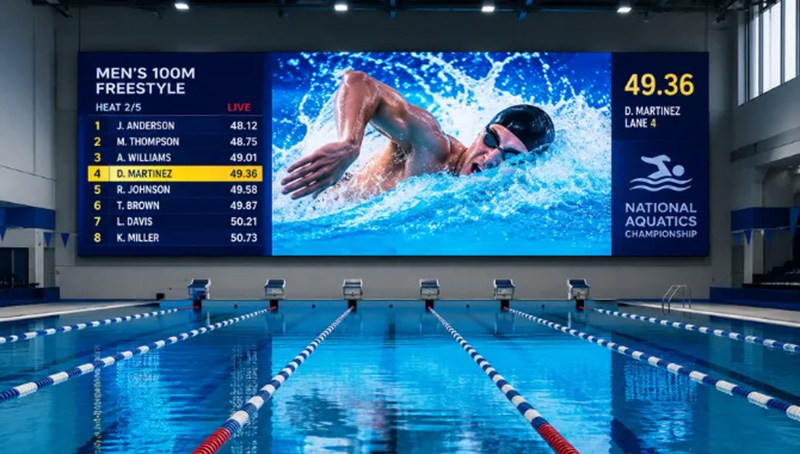
LED scoreboards in swimming pools are made to work well in places with a lot of moisture and fog. They keep working in high-humidity areas. They can show the scores, team details, and how the game is going at any time. This makes it easy for people to see and keep up with what is happening.
The screen is bright and easy to see from many different spots. People can read the data, no matter where they sit. A few top models also show game replays. They can show moments when awards are given or sponsor ads. This lets the screen share news and ads at the same time.
LED Screens in Indoor Live Events and Esports
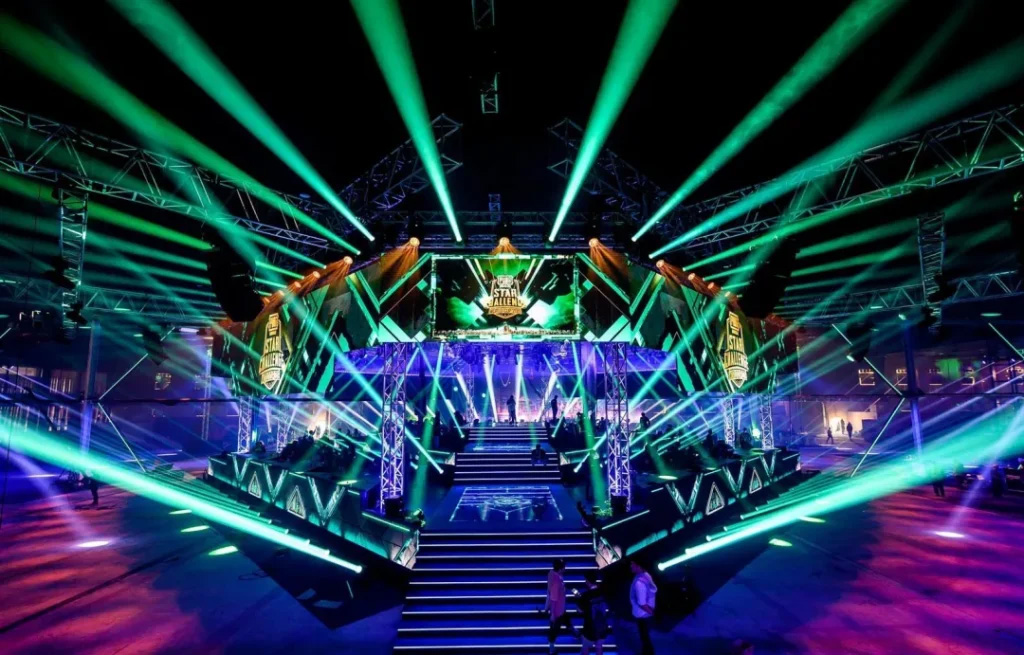
Esports contests need a strong way for people to see what is happening. There are big LED screens at these events. These screens show player images, game video, and live scores. People watching can get a good look at the action. This also gives fans interesting things to watch from live events. It lets them feel part of what is going on. This is made for Generation Z fans and what they want to see at these events.
Screens can be used with things like smart technology, new digital tools, and VR. This brings new ways for people to work with screens.


 Guangdong Province, China
